City of Vancouver · R1-1 Multiplex · Landowner Guide
The number you heard from your neighbour and the number a developer has in mind are rarely the same. Understanding the gap is where this conversation begins.
Vancouver’s R1-1 zone has been in place since October 2023. Most homeowners in the city have heard something about it by now. Many have received letters from developers. Some have had conversations with neighbours who sold.
And most of them have arrived at a number in their head that they believe their property is worth to the development market.
That number is usually wrong — and it is usually wrong in the same direction. It is too high.
What a developer will pay is calculated from the top down: what the completed units will sell for, minus construction costs, minus their required return. The FSR limit, the lot dimensions, the site constraints — trees, hydro lines, lane access, slope — all factor into what actually pencils out. The number a developer offers you reflects their math, not yours. It is designed to work for them.
Knowing whether it works for you — whether it is fair, whether there is room to negotiate, whether selling even makes sense right now — requires independent analysis before you sit down at that table. That is the conversation Jamie Wallace has with Vancouver landowners every week.
The Person You Want on Your Side
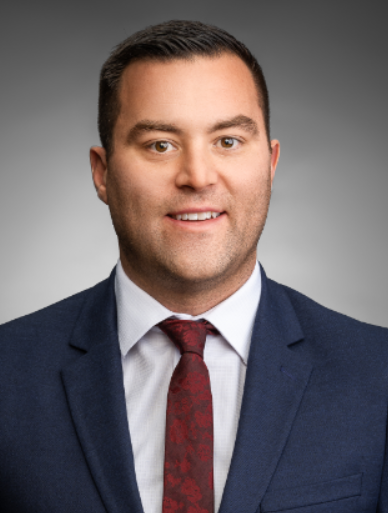
Before joining Wallace Green, Jamie Wallace spent more than five years running the acquisitions department for one of Vancouver’s leading developers. His job was to identify Vancouver lots, underwrite their development potential, and negotiate to acquire them — for as little as possible.
He evaluated the same streets and neighbourhoods you live in. He knows how developers score a site, what they will pay, what makes them walk away, and where landowners have leverage they do not know about. He has personally negotiated and acquired over $250 million in real estate.
Today Jamie is on the other side of that table — representing landowners. Wallace Green has represented owners on high-profile redevelopment sites and land assemblies across the City of Vancouver, including coordinating multiple neighbouring owners to negotiate collectively and maximise the value each receives.
Recent Vancouver Transactions — Representing Sellers
Land Assembly — West 28th Avenue, Vancouver
Three neighbouring owners · Three lots assembled · Coordinated representation to maximise collective value
Redevelopment Site — Cambie Corridor, Vancouver
Single owner · Two-lot redevelopment site · One of Vancouver’s most active development corridors
$250M+ Personally Negotiated and Acquired
Jamie Wallace — former acquisitions lead, Vancouver developer
R1-1 Zone · In Effect Since October 17, 2023
The City of Vancouver’s R1-1 zone replaced nine legacy RS zones in October 2023 and applies across most of Vancouver’s low-density residential land. Here is what it means in practical terms — including the site constraints most landowners are not told about before they accept an offer.
3 to 4 units: minimum lot area 306 m² and 10.0m frontage. 5 units: minimum 464 m² and 13.4m frontage. 6 units (strata): minimum 557 m² and 15.1m frontage. 7 to 8 units: same minimums but all units must be secured rental — no strata titles. The lot must have rear lane access and cannot be in a floodplain.
The standard working FSR for a Vancouver strata multiplex is 1.0, achieved after the density bonus contribution payment to the City. Projects certified to Net Zero / Zero Emission Building standards receive an additional 19% floor area exclusion — effectively bringing the buildable envelope to approximately 1.2 FSR. For fully secured rental projects, 1.0 FSR is permitted without the bonus contribution. Understanding exactly what 1.0 or 1.2 FSR produces on your specific lot dimensions is the number that drives every development feasibility conversation.
Zoning eligibility does not equal development feasibility. Trees — both on your lot and on neighbouring properties — can significantly restrict what can be built or make a project cost-prohibitive. BC Hydro overhead lines require electrical engineer clearance. Slope, soil conditions, and artesian wells add cost and complexity. These are the factors developers assess before they make an offer — and the factors landowners are rarely told about before they accept one.
Multiplex development is not limited to R1-1. RT-7 and RT-9 zones were amended in June 2024 to permit multiplexes at 1.0 FSR. RT-8 (parts of West Kitsilano) and RT-10 (Kensington-Cedar Cottage) are being added by June 30, 2026 under Bill 25. If your property is in one of these zones — or a neighbouring zone you are unsure about — your development eligibility may be changing right now.
For Vancouver Landowners
When a developer sends a letter or knocks on your door, they are presenting you with one path — their path. Understanding all three options available to you, and which one fits your situation, is the conversation that changes outcomes.
01
Most common — and most often done wrong
The most direct exit. But the offer that lands in your mailbox from a developer reflects their analysis of what your land is worth to them — not what it is worth on the open market with proper representation. Wallace Green has run competitive processes on Vancouver development sites that produced outcomes materially different from the first offer on the table. That gap is where independent advice earns its value.
02
For owners with neighbouring lot potential
If neighbouring properties could be assembled together, the combined site may be worth significantly more per lot than any individual property sold separately. Land assemblies require trust between neighbours, careful coordination, and an advisor who understands both the development economics of the assembled site and how to hold a multi-owner process together. Wallace Green has represented owners through exactly this on West 28th Avenue and the Cambie Corridor.
03
For owners with time, capital, and appetite
Some landowners choose to develop the property themselves or enter a partnership with a builder rather than sell the land outright. This path retains more value but carries construction risk, financing complexity, and a longer timeline. For the right landowner — particularly those building for multi-generational family use or who have relevant background — it is a realistic option. Jamie can walk through whether it makes sense for your specific situation.
No Obligation · Fully Confidential
Vancouver is one of the most active development markets in Canada. Developers are sending unsolicited letters to homeowners across the city — East Van, the West Side, the Cambie Corridor — every week. Those letters are the starting point of a negotiation, not a fair offer.
Before you respond to any developer approach, spend an hour with Jamie Wallace. He will look at your specific address, confirm your zoning and lot characteristics, run the development economics for your site, and give you a clear picture of what your property is actually worth to the development market right now.
If the numbers support a sale, he will walk you through what a properly run competitive process looks like — and how it differs from accepting the first offer that arrived in your mailbox. If the numbers do not support development at current economics, he will tell you that too.
Book a Landowner ConsultationWhat You Learn in One Hour
Confidential · Free · No Obligation
Why Vancouver Landowners Work With Wallace Green
$250M+
In development land personally negotiated and acquired by Jamie — including Vancouver sites
5+
Years in developer acquisitions — evaluating Vancouver lots from the buyer side before representing sellers
Master
Oakwyn Master Award 2022 — Jamie Wallace — top 30 agents across the #1 listing office in Greater Vancouver
Top Producer
Oakwyn Top Producer Award — Jamie Wallace — 2023, 2024 and 2025
Wallace Green Real Estate Group operates under Oakwyn Realty — the #1 listing office in Greater Vancouver by gross dollar volume, seven consecutive years. Jamie Wallace, Scott Wallace, and Carson Green are licensed Personal Real Estate Corporations.
Common Questions
These are the questions we hear most often from Vancouver homeowners in the first conversation. Call Jamie directly at 604‑789‑5277 if yours is not here.
Do not call them back until you have independent analysis behind you. A developer who sends you an unsolicited letter has already decided your property is interesting to them — which means they are working from their own assessment of what it is worth. That assessment is designed to benefit them. Before you engage with any developer, spend an hour with Jamie Wallace to understand what your property is actually worth on the open market with proper representation. That one conversation changes the negotiation entirely.
Most Vancouver properties previously zoned single-family (RS-1 through RS-7, RS-1S, RS-2S) were rezoned to R1-1 in October 2023. R1-1 permits multiplexes of 3 to 8 units depending on your lot size and frontage. RT-7 and RT-9 zones were also amended in June 2024. RT-8 and RT-10 are being added by June 30, 2026. If you are unsure which zone your property is in, call Jamie and he will confirm it for your specific address within minutes.
Unit count depends on your lot area and frontage. 3 to 4 units require a minimum of 306 square metres and 10.0 metres of frontage. 5 units require 464 square metres and 13.4 metres. 6 strata units require 557 square metres and 15.1 metres of frontage. 7 to 8 units are permitted on the same minimum lot size but all units must be secured rental — no strata titles. The lot must also have rear lane access and cannot be in a floodplain.
FSR — floor space ratio — is the total permitted building area as a multiple of the lot area. For a standard strata multiplex in Vancouver, the working FSR is 1.0 after the density bonus contribution payment to the City. Projects certified to Net Zero or Zero Emission Building standards can achieve approximately 1.2 FSR through a 19% floor area exclusion. FSR is the number that determines how much your lot can actually produce in buildable floor space — and therefore what a developer can afford to pay for it. It is more important than unit count.
A land assembly is when two or more neighbouring lots are sold together to a single developer as a combined site. Assembled sites are typically worth more per lot than individual properties sold separately, because the larger combined footprint enables a more significant development project. Whether your property is a good assembly candidate depends on your neighbours, the combined site dimensions, and current developer appetite in your specific location. Wallace Green has represented owners through land assemblies in Vancouver — coordinating multiple neighbours and negotiating collectively. It is a complex process that requires the right advisor from the start.
Zoning eligibility does not automatically mean development feasibility. Trees — both on your property and on neighbouring lots — can significantly restrict what can be built or add substantial cost to a project. BC Hydro overhead lines require electrical engineer clearance. Slope, soil conditions, and artesian wells affect foundation cost. These are the factors developers evaluate before they make an offer. Understanding your site constraints before you engage with any buyer puts you in a fundamentally stronger position.
Tax treatment depends on your specific situation — how long you have owned the property, whether it has been your principal residence, how the transaction is structured, and applicable tax rules at the time of sale. Development land sales can have different tax implications than standard residential sales, and the implications can be material. Speak with a qualified tax accountant before making any decisions. Wallace Green can connect you with professionals who specialise in development land transactions in Greater Vancouver.
Yes. Most of the Vancouver landowners who call Jamie are not planning to act immediately. They want to understand what their property qualifies for, what it is worth to the development market right now, and whether there are options they have not considered — so they can make an informed decision when the time is right. The consultation is free, confidential, and carries no obligation.
City of Vancouver · R1-1 Multiplex · Land Assembly
Whether you have received a developer letter, heard a number from your neighbour, or are simply wondering what your Vancouver property is worth to the development market — the first step is a conversation with someone who can give you an honest, independent answer.
Jamie Wallace spent years acquiring Vancouver development sites before representing the sellers of them. That is a combination very few advisors in this market can offer.
Or reach out directly
Wallace Green Real Estate Group · Oakwyn Realty
101 – 3151 Woodbine Drive, North Vancouver, BC V7R 2S4
Oakwyn Realty
101 - 3151 Woodbine Drive North Vancouver, BC V7R 2S4